
Explainer · July 2, 2026 · 6 min · By Tariq Mehmood
Silicone, Saline, or Gummy Bear: How to Choose an Implant Type
The three implant families behave differently in the body, age differently, and fail differently. Here is how surgeons actually think about the choice.
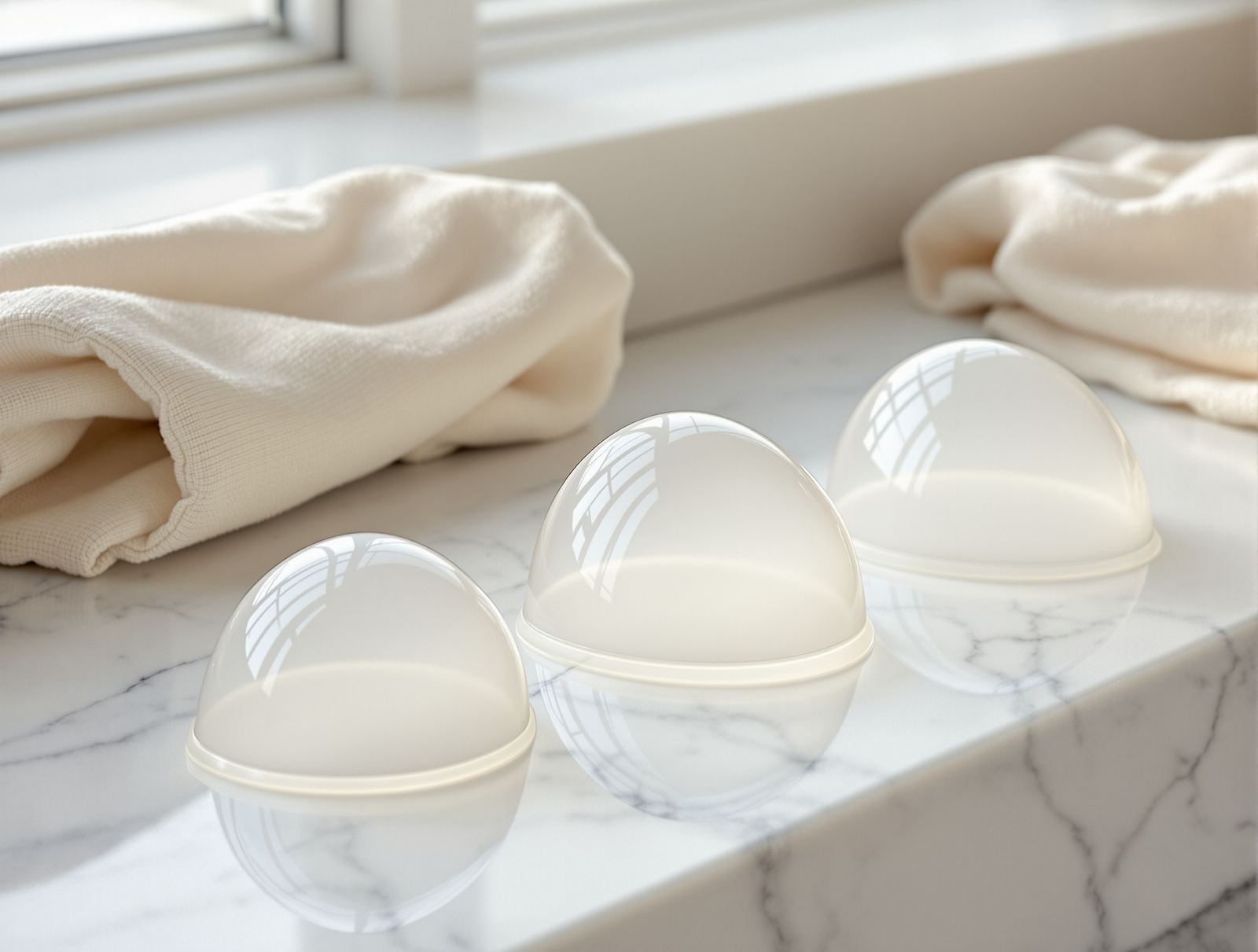
Ask five Los Angeles surgeons which implant type is best and you will get five versions of the same answer: it depends on your tissue, your goals, and your tolerance for monitoring. That answer is honest, but it is not very useful until you understand what actually separates the options. This explainer covers the three implant families in plain English, what each feels like, how each ages, and the questions that narrow the choice quickly.
The three families, defined
Saline implants are silicone shells filled with sterile salt water after they are placed. Traditional silicone gel implants arrive pre-filled with a cohesive gel that moves as one soft mass. Highly cohesive gel implants, the ones patients call gummy bear implants, use a firmer gel that holds its shape even if the shell is cut. All three are approved by the FDA for augmentation, with minimum age requirements of 18 for saline and 22 for silicone.
How they feel
Feel is the difference patients notice first. Silicone gel is widely considered the closest match to natural breast tissue, which is why it accounts for the large majority of augmentations performed in the United States. Saline tends to feel firmer and can show rippling, especially in patients with thinner tissue coverage. Highly cohesive implants sit between the two: soft to the touch, but with more internal structure. Coverage matters as much as the implant itself, and that is one reason implant placement gets decided alongside implant type rather than after it.
How they age and fail
Every implant type can eventually fail, and the failure mode differs. A saline rupture is obvious: the breast visibly deflates over a day or two as the body absorbs the salt water harmlessly. A silicone rupture is often silent. The gel stays in place, the breast looks unchanged, and the rupture is found only on imaging. That is why the FDA recommends periodic ultrasound or MRI screening for silicone implants, starting a few years after surgery. Highly cohesive gel behaves the most predictably of the three when the shell fails, because the gel does not migrate.
Cost and incision differences
Saline implants are usually the least expensive option, often by several hundred to a thousand dollars per case, because the devices themselves cost less. They can also be placed through a slightly smaller incision, since they are filled after insertion. Silicone and highly cohesive implants require a somewhat longer incision, which is part of the conversation covered in our piece on incision options and scars. In Los Angeles, the implant choice moves the total price less than surgeon experience and facility fees do.
Profile and shape
Round implants dominate the market, and modern round implants in a soft cohesive gel look natural in most bodies because the gel settles into a teardrop-like distribution when upright. Shaped, textured implants have fallen out of favor in the United States after the recall of certain textured devices. Most LA practices now work almost exclusively with smooth round implants across all three fill types.
How surgeons narrow the choice
In practice, the decision tree is shorter than the marketing suggests. Patients with very little natural breast tissue are usually steered away from saline because of rippling risk. Patients who want the most natural feel and accept imaging surveillance usually land on silicone gel. Patients who prioritize predictable behavior in the rare event of a rupture often choose a highly cohesive device. Budget-conscious patients with adequate tissue coverage sometimes choose saline deliberately, and there is nothing wrong with that choice when it is made with clear information.
Questions worth asking in consultation
Bring three questions to your consultation. First, which implant type does the surgeon recommend for your tissue, and why. Second, what does the practice's own revision history look like for that device. Third, what surveillance schedule they recommend and what it costs over ten years, since silicone monitoring is a real recurring line item that belongs in the total cost picture. A surgeon who answers all three specifically, with numbers, is telling you something about how the rest of the process will go.
The bottom line
There is no universally best implant, only a best match between a device, a body, and a set of priorities. Silicone gel earns its popularity on feel. Saline earns its place on price and rupture transparency. Highly cohesive gel earns its niche on structural predictability. Understand those trade-offs before the consultation, and the conversation with your surgeon becomes a real decision rather than a sales presentation.
Further reading: Recent advancements in artificial intelligence for breast cancer: Image augmentation, segmentation, diagnosis, and prognosis approaches (Semin Cancer Biol 2023); Endoscopic-Assisted Transaxillary Breast Augmentation (Clin Plast Surg 2023); Breastfeeding Outcome and Complications in Females With Breast Implants: A Systematic Review and Meta-Analysis (Aesthet Surg J 2023).